This article contains affiliate links to italki. If you sign up through them, we may earn a commission at no extra cost to you. It does not affect which options we recommend.
What italki actually is
italki is a marketplace that connects language learners with tutors for one-on-one video lessons. For Japanese specifically, that means access to thousands of native speakers, ranging from certified teachers running structured curricula to casual conversation partners who just want to chat and correct your mistakes as you go.
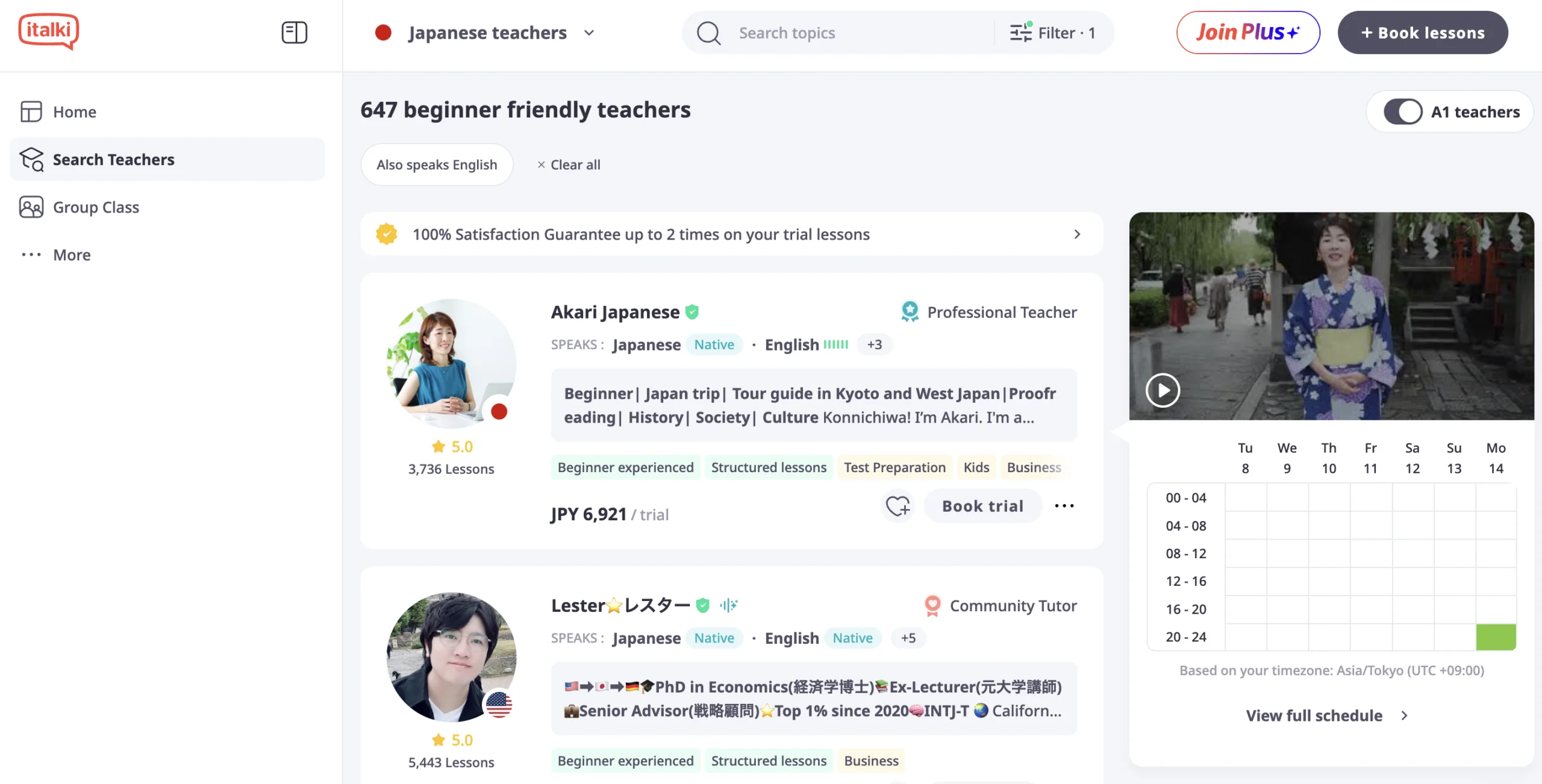
I already covered italki briefly against Preply in my head-to-head comparison. This review goes deeper into what using italki is actually like, tutor by tutor.
How booking actually works
You buy credits (italki‘s internal currency, roughly pegged to USD) and spend them on individual lessons — no subscription, no recurring charge you have to remember to cancel. Each tutor sets their own price and availability, and you book directly into open slots on their calendar.
Trial lessons are typically shorter and cheaper than regular sessions — commonly seen around $4–$10, though each tutor sets their own prices — specifically so you can test whether a tutor’s teaching style and personality actually work for you before committing to anything longer.
Professional Teachers vs. Community Tutors
This distinction matters more than it might seem at first glance.
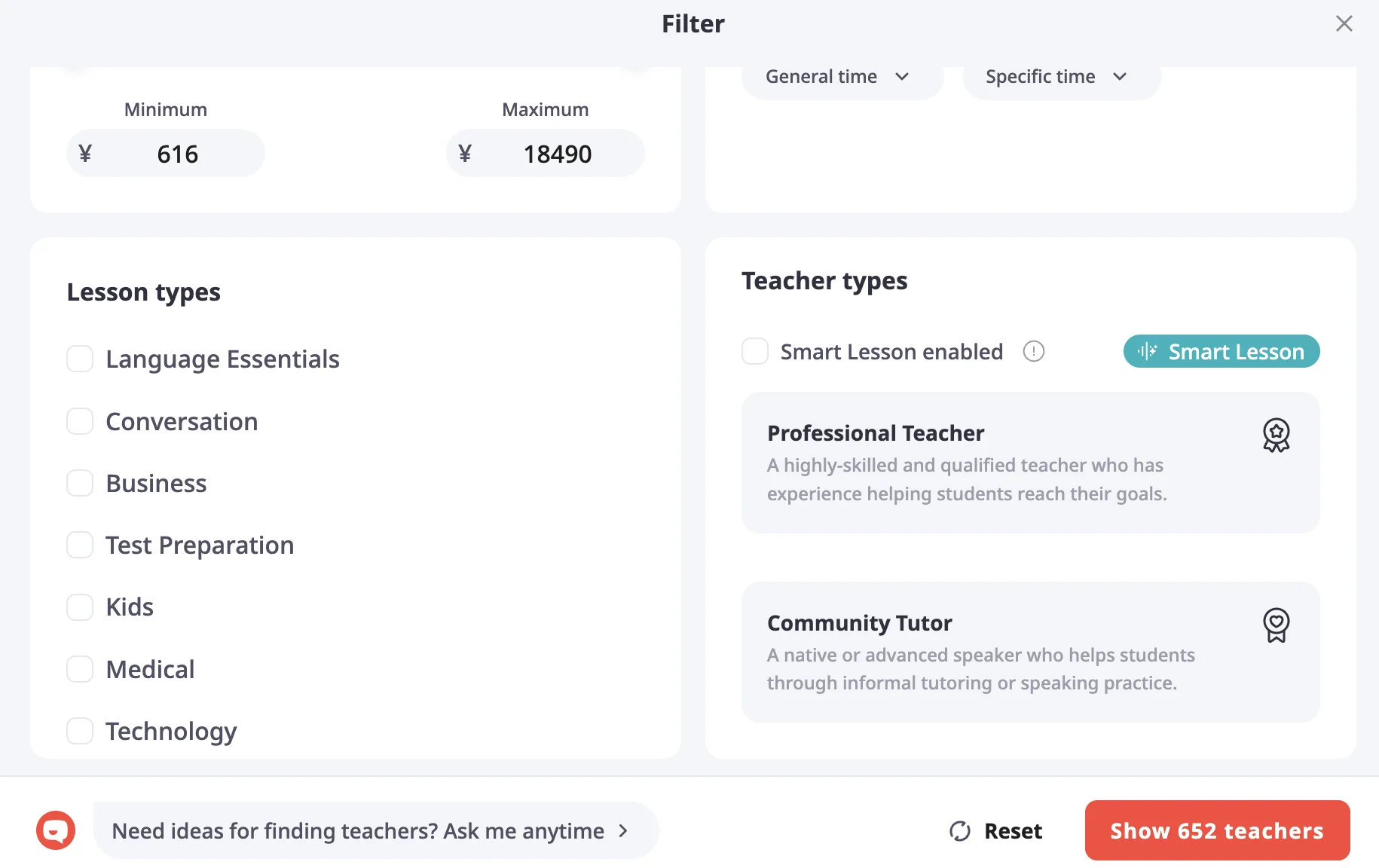
- Professional Teachers are certified and typically follow a structured curriculum with defined levels, homework, and progress tracking. They tend to cost more, and they’re the better fit if you want something closer to a traditional class.
- Community Tutors are native speakers without formal teaching credentials. They’re usually cheaper and better suited for free conversation practice, casual correction, and exposure to natural, unscripted speech.
Neither is objectively better — it depends on what you actually need. If you’re still building grammar fundamentals, a Professional Teacher’s structure helps. If you already have the basics and just need reps talking, a Community Tutor is often the more efficient (and cheaper) choice.
What a trial lesson is actually like
Every tutor I tried started with roughly the same shape: a few minutes of getting-to-know-you conversation (partly to gauge your actual level, regardless of what you self-reported), then a short sample of how they’d structure ongoing lessons — grammar correction, a mini reading passage, or free conversation, depending on the tutor’s style.
The honest takeaway: the trial lesson is doing exactly what it’s supposed to do. You learn more about whether a teaching style fits you from one inexpensive trial than from reading ten tutor bios.
Reviews and ratings
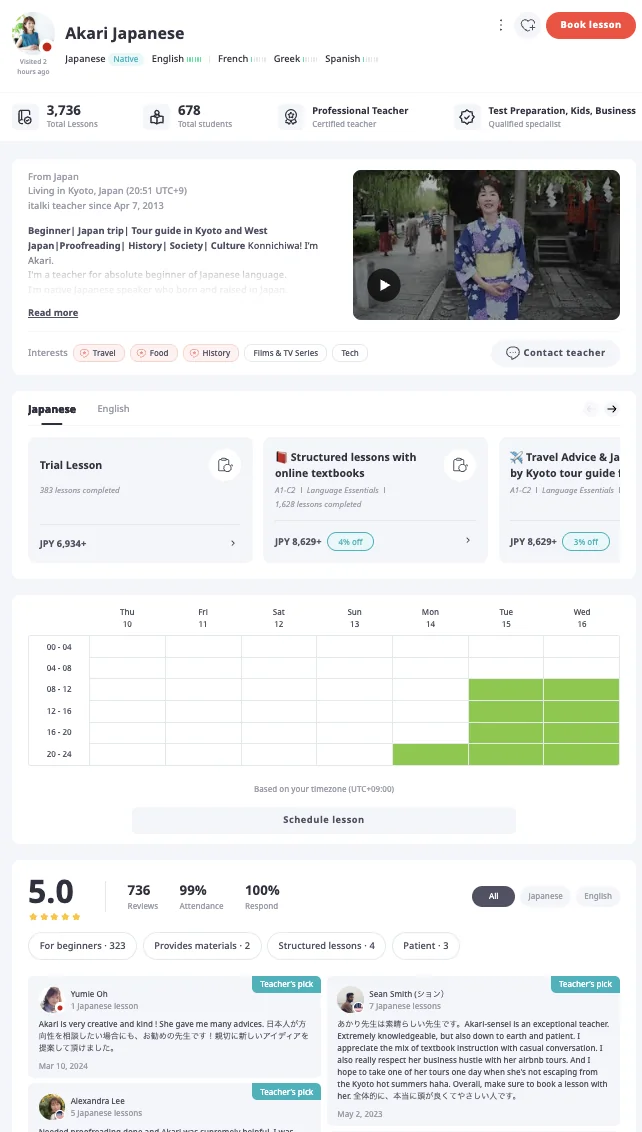
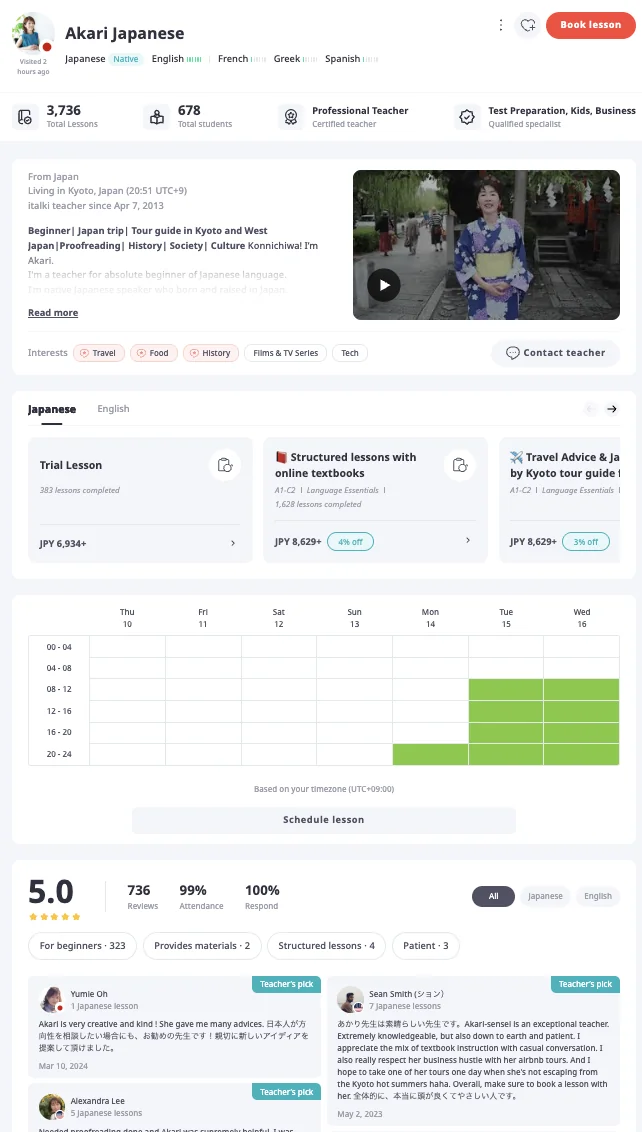
Every tutor has a public rating and review history from past students, visible on their profile before you book. In practice, tutors with very high lesson counts (hundreds or thousands of completed lessons) are a safer bet for a first trial — not because newer tutors are worse, but because you have more signal to judge them on.
Who italki is actually good for
- Good fit: learners who want control over cost and schedule, who don’t mind spending a bit of time trying a few different tutors before settling in, and whose main goal is speaking practice and correction.
- Less ideal fit: learners who know they’ll only stick with lessons if there’s an ongoing commitment holding them accountable — for that, Preply’s subscription structure is arguably a better match.


コメント