
Why trust this comparison
I’m a native Japanese speaker based in Tokyo and Osaka. I’m not a language-app reviewer by trade — I write this site because I keep getting the same question from people learning Japanese: “which app should I actually use?” So instead of guessing, I signed up for the platforms below, worked through their free tiers and trials, and compared what each one is genuinely built for.
This isn’t a “top 10” list padded with apps I’ve never opened. It’s a shorter, more honest breakdown of the tools that actually do different jobs — because the biggest mistake I see learners make isn’t picking the “wrong” app, it’s expecting one app to do everything.
The short answer
- Want a structured, all-in-one course (grammar, kanji, JLPT path): a course-style platform like Nihongo Master or Nihoner is the better starting point.
- Want real speaking practice with a native tutor, on your own schedule: italki.
- Want an ongoing arrangement with the same tutor: Preply.
- Want a free, no-pressure way to build vocabulary and kanji recognition: Duolingo or WaniKani.
Most learners who actually reach conversational Japanese end up combining two of these — one tool for structured input, one for real speaking practice. Below is what each one is like to actually use.
Nihoner
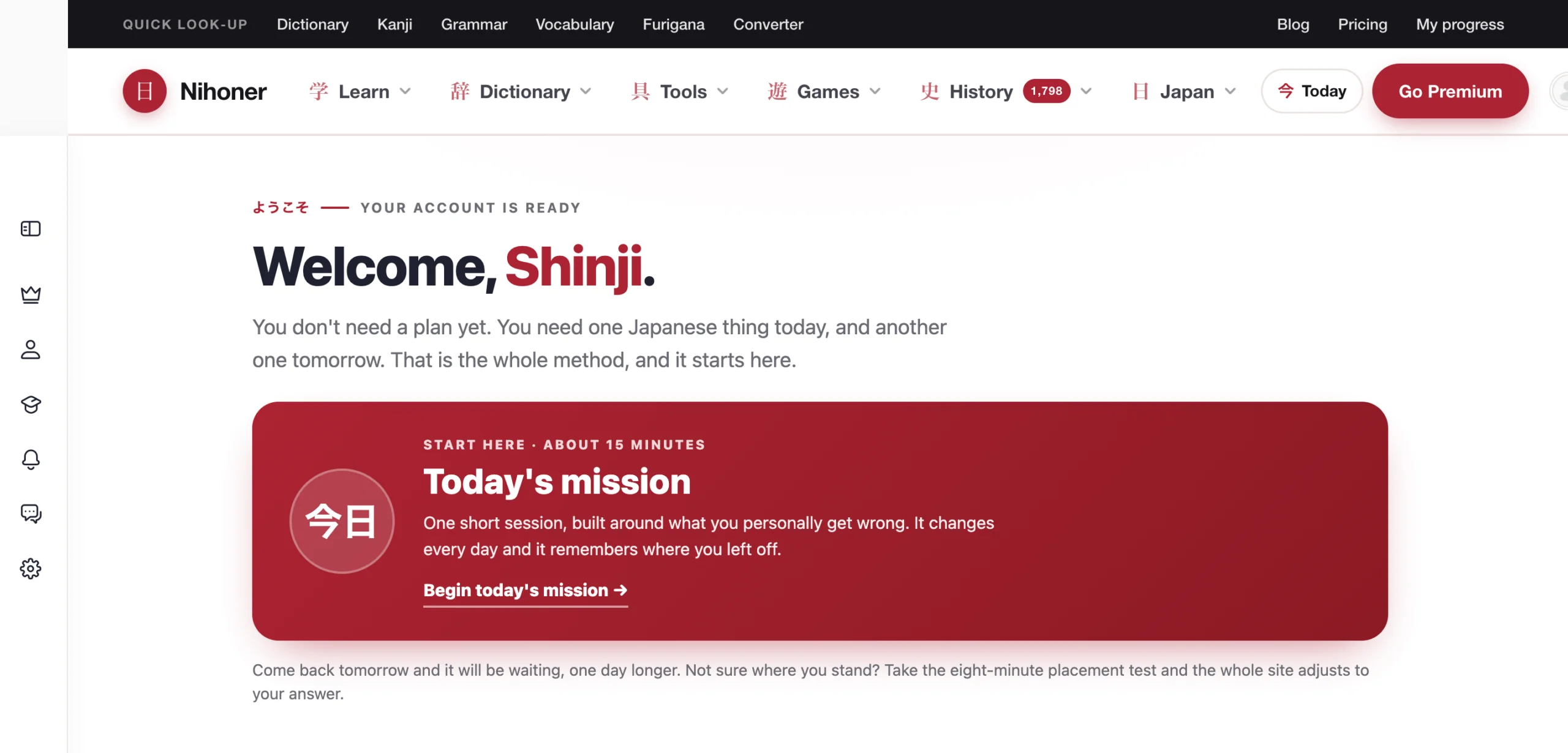
Nihoner is a browser-based platform built specifically around Japanese, combining a searchable dictionary, structured courses covering kanji and grammar, and a set of vocabulary games (hiragana and katakana recognition, kanji drills, and so on). It offers a free membership with no card required, which includes the dictionary, all of the games and starter lessons from the courses, plus paid tiers that add the full course lessons, an uncapped daily review deck and saved readings.
Good for: learners who want a single Japanese-focused workspace — dictionary, courses, and games — instead of stitching together separate apps.
Worth knowing: Nihoner is a newer, independently run platform that’s still actively adding features, and its pricing has been adjusting as it grows. Check its current pricing page before signing up, since the rate you lock in when you join is the rate you keep as long as you stay subscribed.
italki
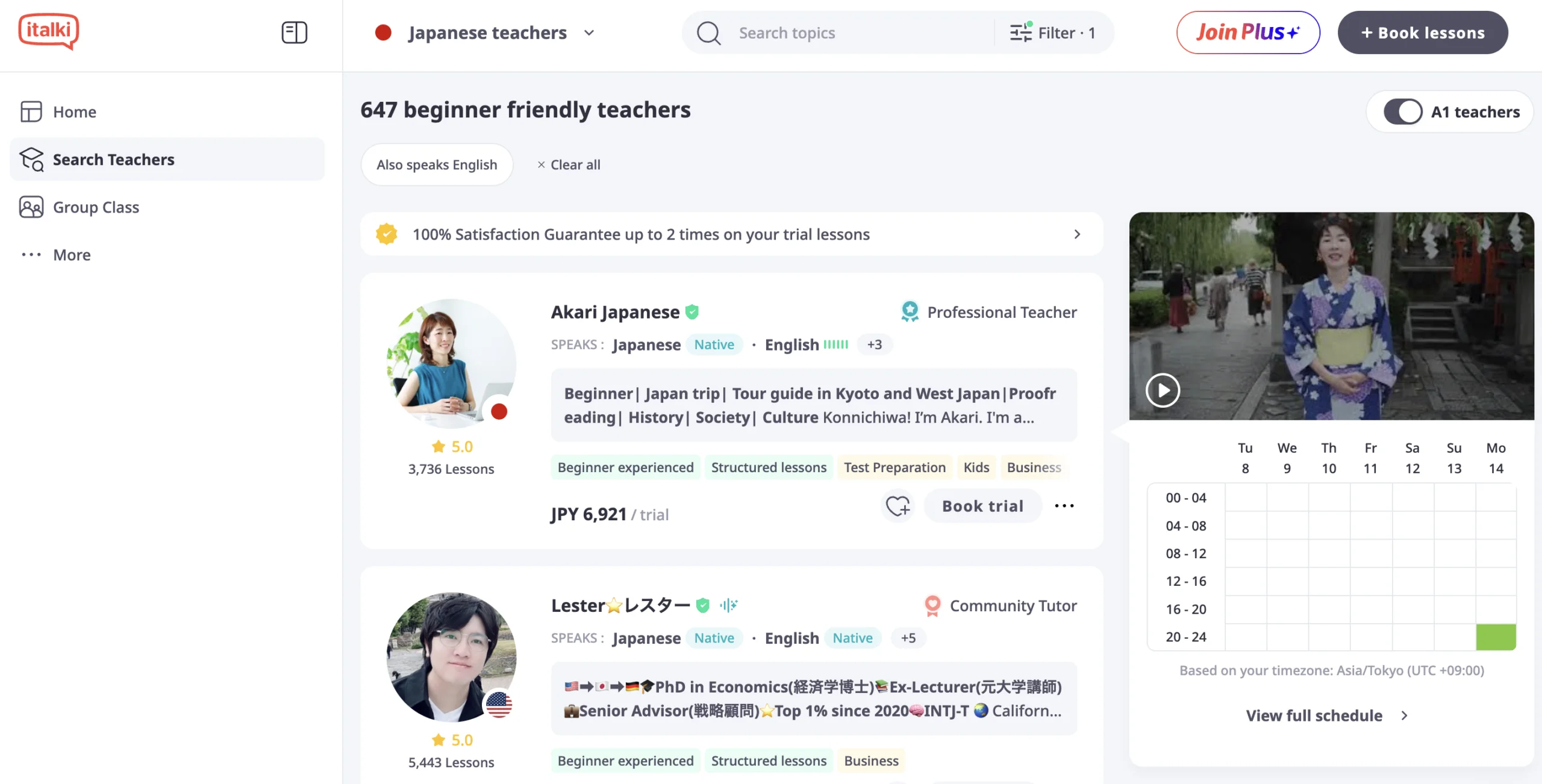
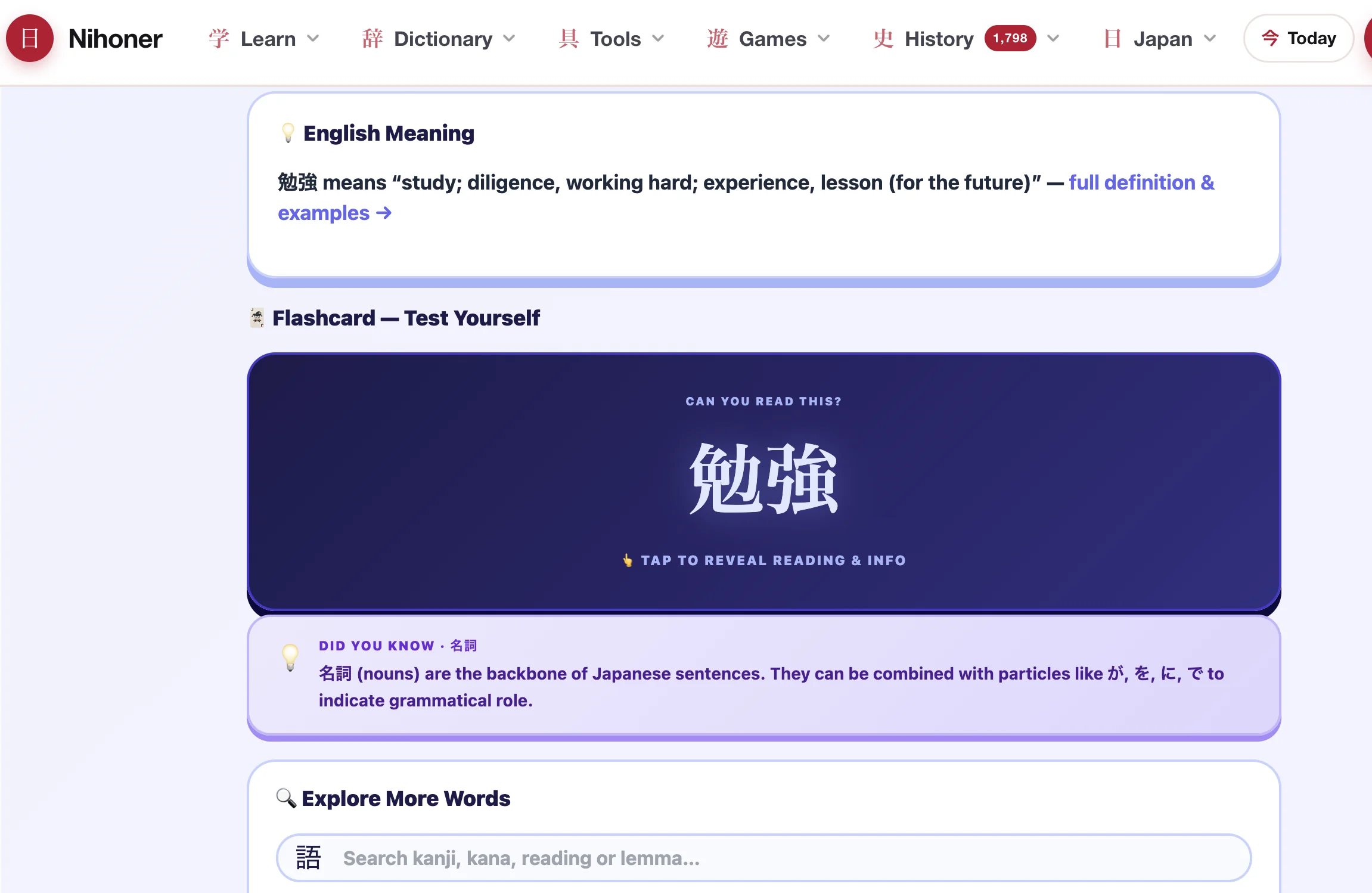
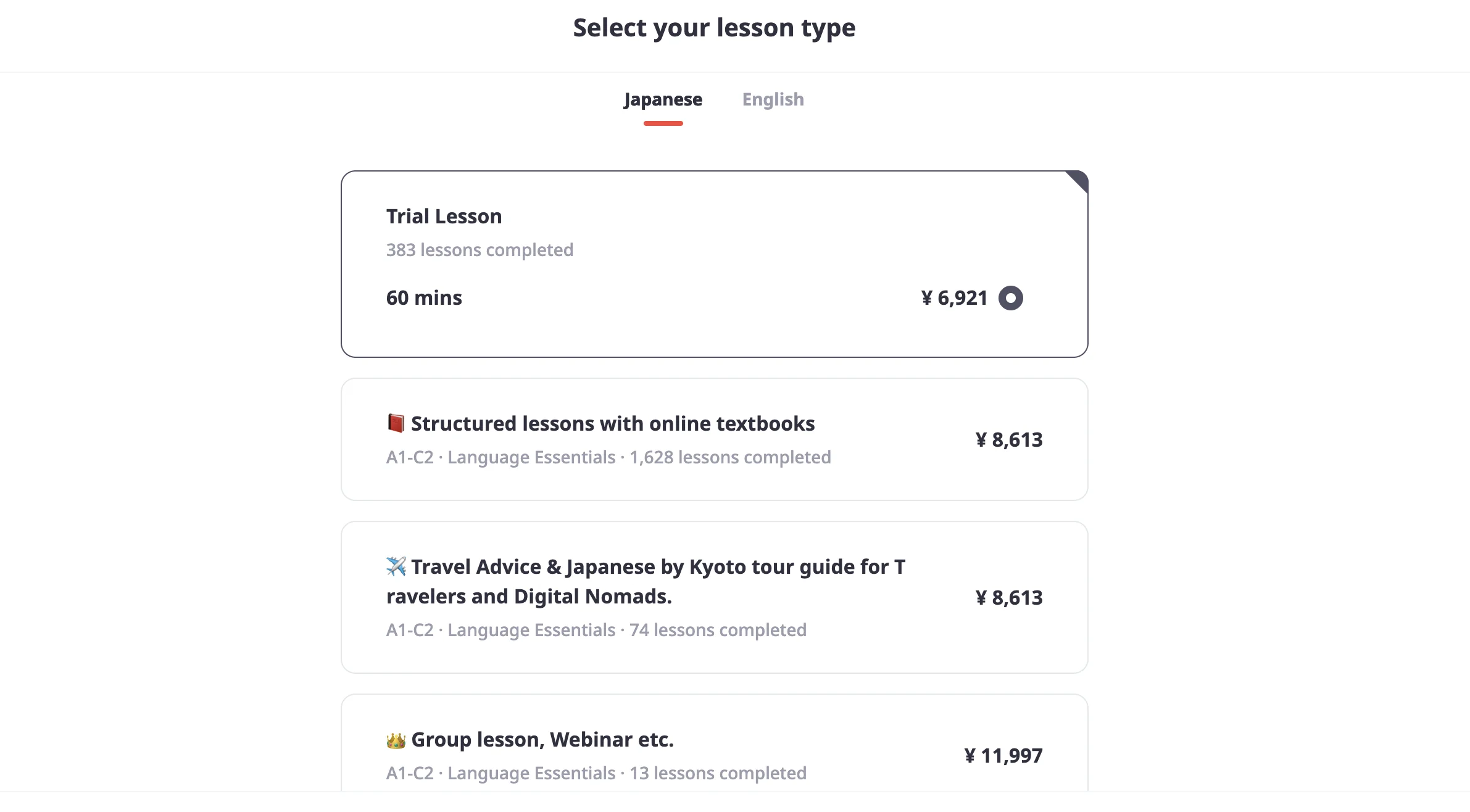
italki connects learners with native Japanese tutors for one-on-one lessons, and it’s pay-per-lesson rather than subscription-based. You buy credits and book individual sessions — 30, 45, 60, or 90 minutes — whenever you want, with no obligation to keep going every week.
Tutors fall into two categories: Professional Teachers (certified, structured curriculum) and Community Tutors (native speakers without formal teaching credentials, usually cheaper and more conversation-focused). Each tutor sets their own prices on italki; trials starting around $4 and lessons of roughly $15–$40/hour are commonly seen, but these aren’t official rates.
Good for: learners with an unpredictable schedule who want control over how much they spend and which teacher they work with, and who mainly need real speaking and correction — pronunciation, pitch accent, and knowing when casual speech turns rude in a formal setting.
Worth knowing: because it’s a marketplace, the learning experience depends heavily on which tutor you pick. Plan to try a few trial lessons before committing to a regular teacher.
Preply
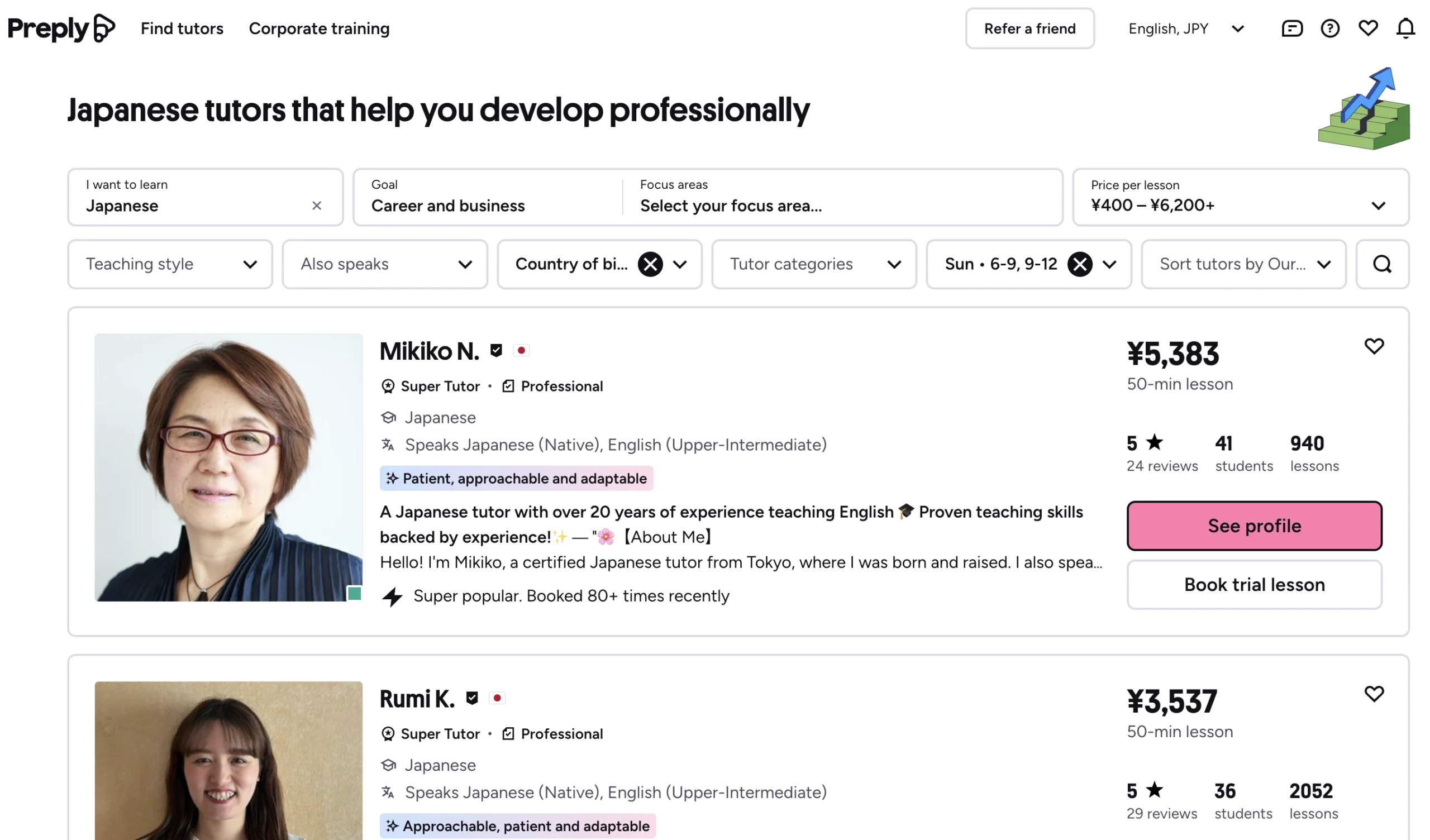
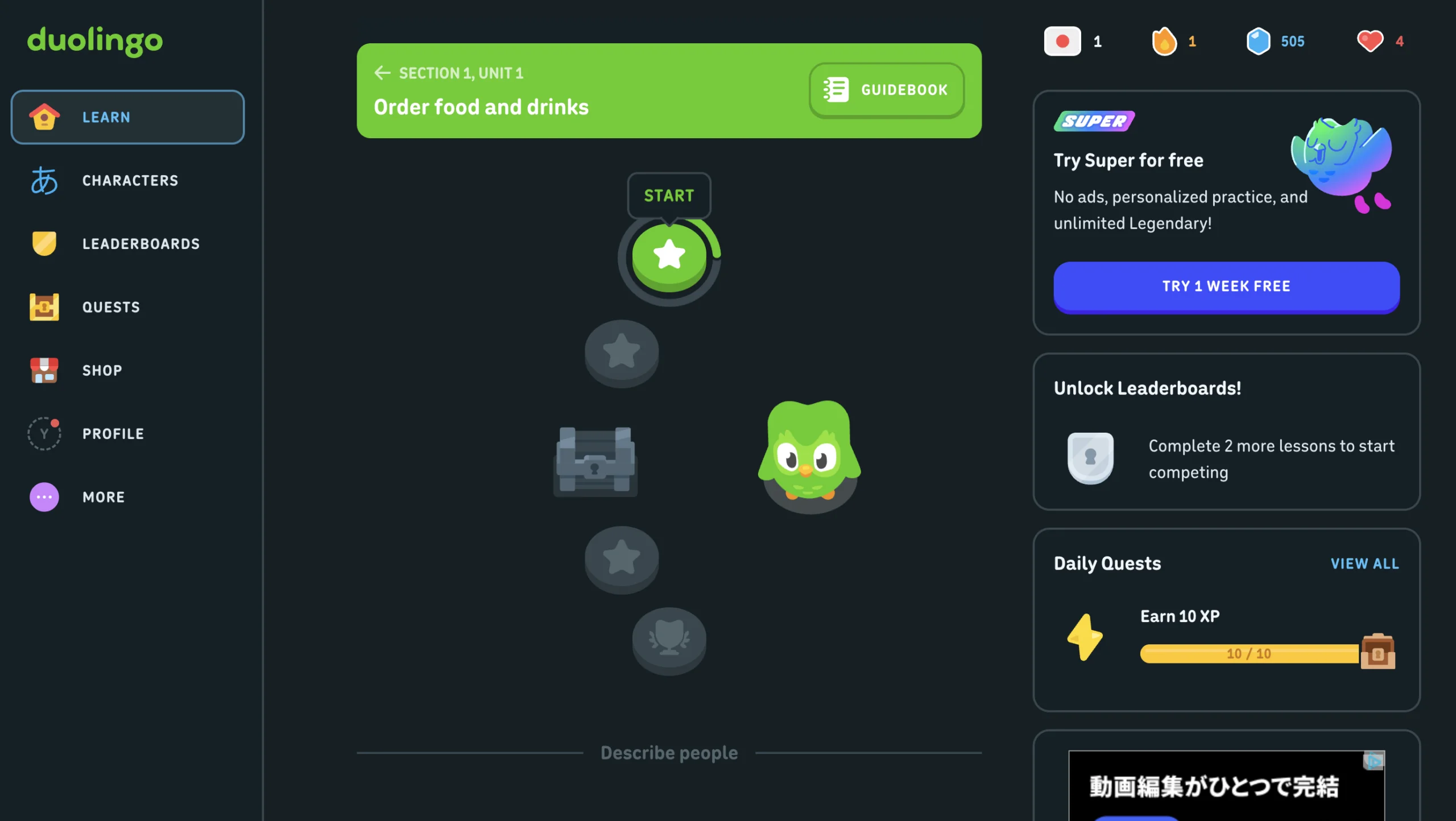
Preply works differently: it uses a tutor-specific subscription model that renews every 28 days. In exchange, you get a more guided setup — Preply’s matching process pushes you toward a tutor and a plan, rather than leaving you to browse a full directory yourself.
Tutors set their own prices; rates of roughly $10–$30 per lesson are commonly seen, but that isn’t an official rate, some Japanese tutors charge more, and lessons are typically 50 minutes. Because the subscription renews every 28 days, compare a full renewal cycle with what the same number of italki lessons would cost.
Good for: learners who know they’ll stick with lessons more consistently if there’s an ongoing subscription and one dedicated tutor tracking their progress, rather than booking lessons one at a time.
Duolingo and WaniKani (the free/low-cost options)
If your budget is zero right now, these are the two worth knowing about:
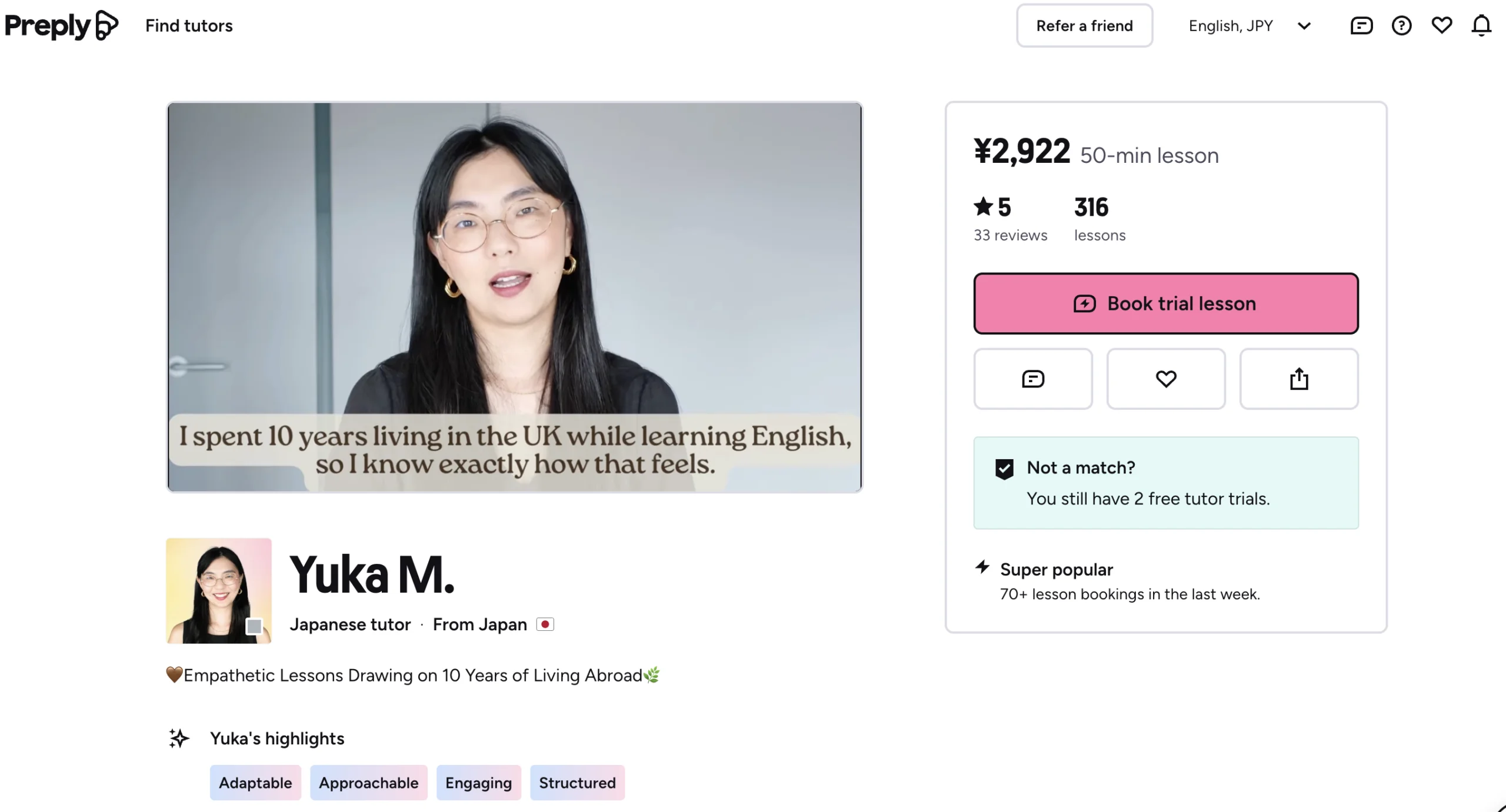
- Duolingo is the most widely used language app in general, and its Japanese course covers vocabulary, basic grammar, and some kanji through short, gamified lessons. It’s genuinely free, with an optional paid tier that removes ads and hearts limits. The tradeoff is that it’s a general-purpose app, not built specifically around the way Japanese grammar and kanji actually work — many learners eventually add a Japanese-specific tool alongside it.
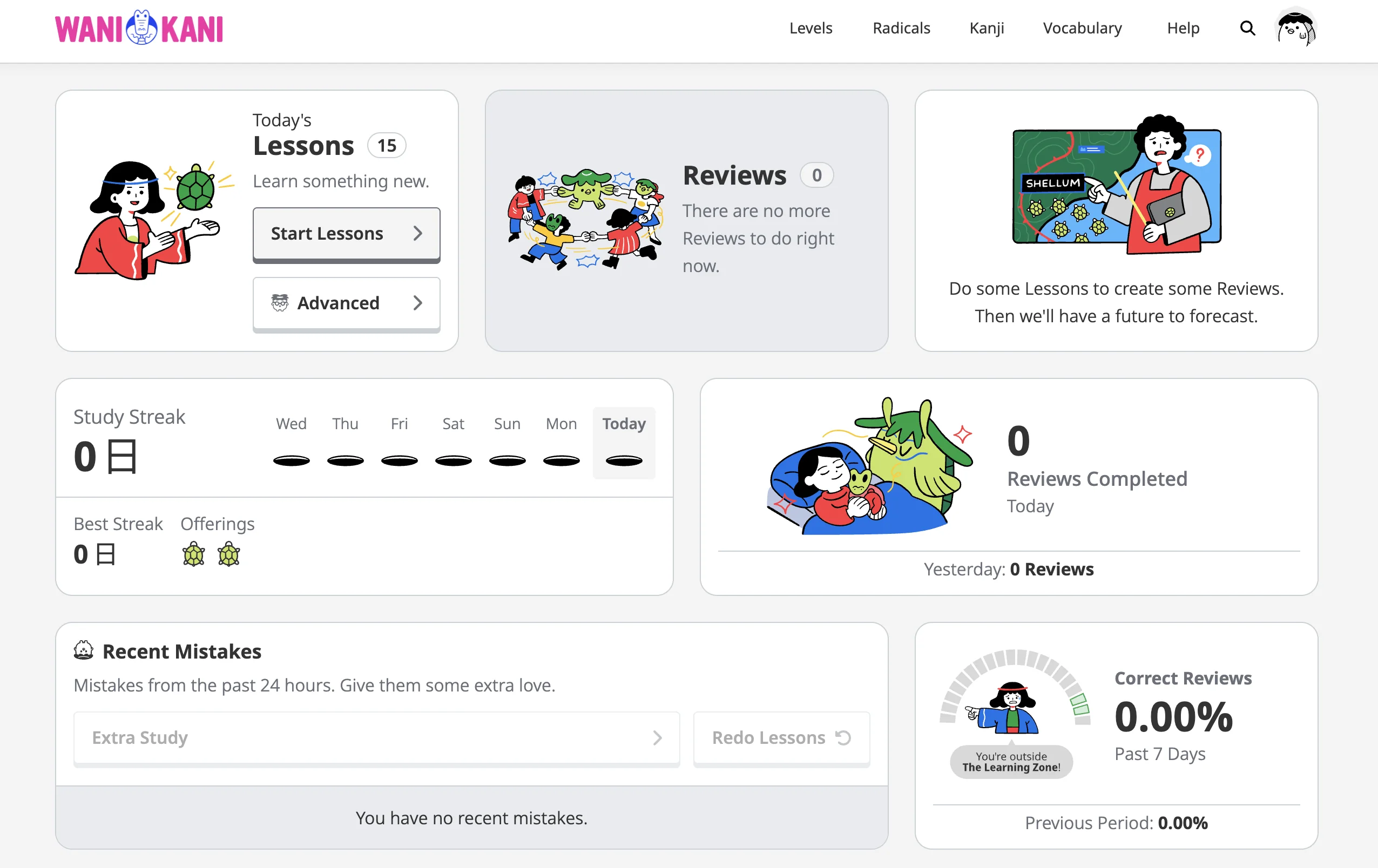
- WaniKani focuses on one thing: kanji and vocabulary, using a spaced-repetition system built for Japanese’s writing system specifically. It’s a strong add-on once you already have basic grammar down and want to build kanji recognition efficiently.
How to actually choose
A few honest questions to ask yourself:
- Do you need to speak, or do you need to understand? If your goal is travel or daily conversation, prioritize a tutor platform (italki or Preply) over an app. For a closer look at these two and a few other options, see Best Online Japanese Tutors. Apps are good at building recognition; they’re not good at teaching you to actually produce natural speech under pressure.
- Do you learn better with structure, or with flexibility? Preply and a course platform like Nihoner reward people who want a set path. italki rewards people who know roughly what they want and just need a native speaker to practice with. If none of these give you enough structure and you’re weighing an actual classroom, that’s a different comparison worth reading on its own.
- What’s your budget, realistically, over the next four weeks? Compare what a single italki lesson costs with what a full 28-day Preply renewal cycle costs for a tutor you like. Start smaller than you think you need to, and scale up once you know you’ll actually stick with it.

コメント