This article contains affiliate links to Preply. If you sign up through them, we may earn a commission at no extra cost to you. It does not affect which options we recommend.
What Preply actually is
Preply is a tutoring platform built around tutor-specific subscriptions: you subscribe to a tutor, and the subscription renews every 28 days. Instead of buying individual lesson credits like on italki, you stay with one tutor. The idea is consistency: one tutor and ongoing progress tracking.
I covered Preply briefly against italki in my head-to-head comparison. This review goes deeper into what the matching process and ongoing lessons are actually like.
The matching process
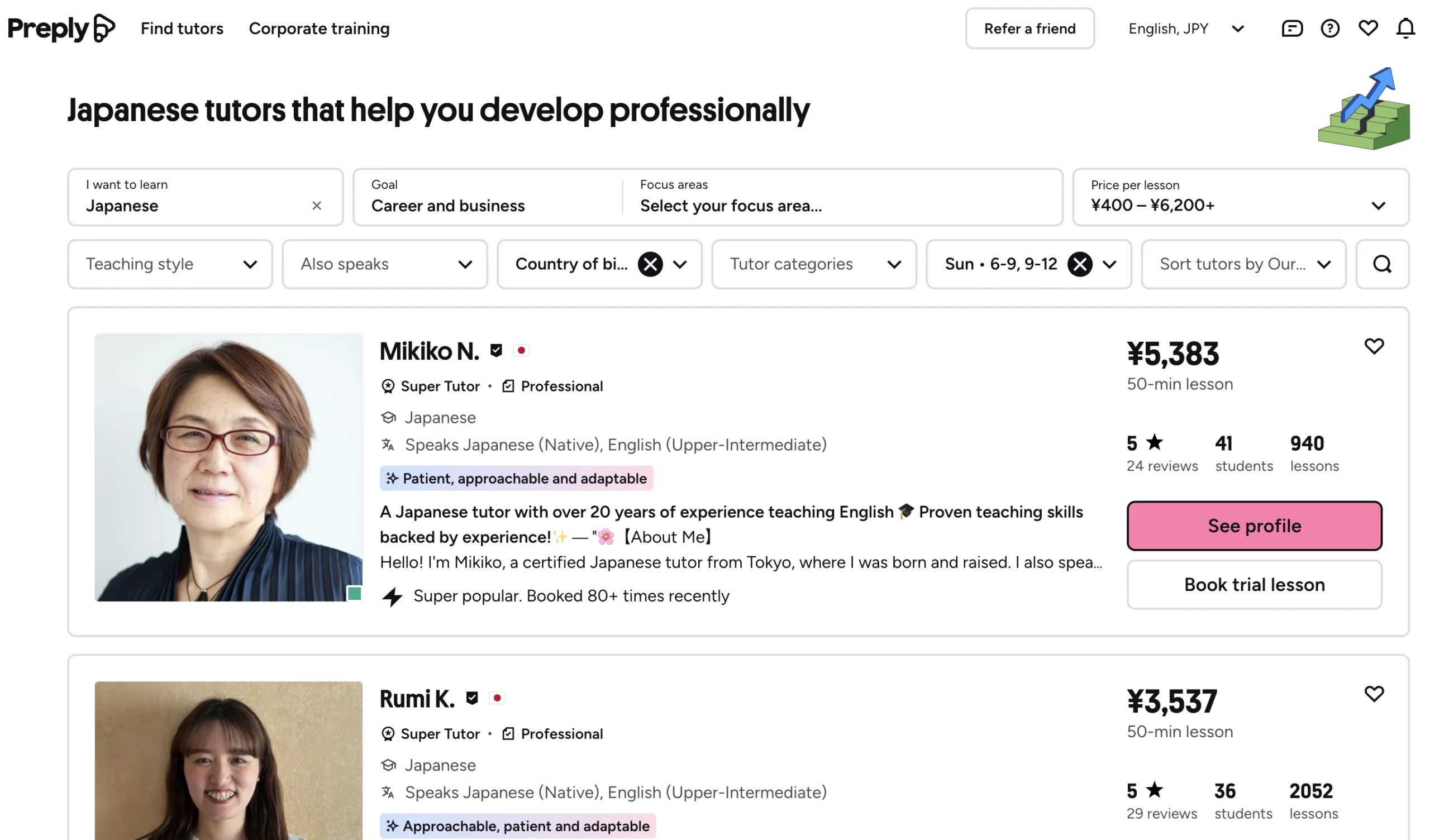
Rather than browsing a full open directory the way italki works, Preply starts with a short questionnaire — your current level, your goals (travel, business, general fluency), and your availability. Based on your answers, Preply recommends a shortlist of tutors, though you can still search and filter the full directory yourself if you’d rather pick manually.
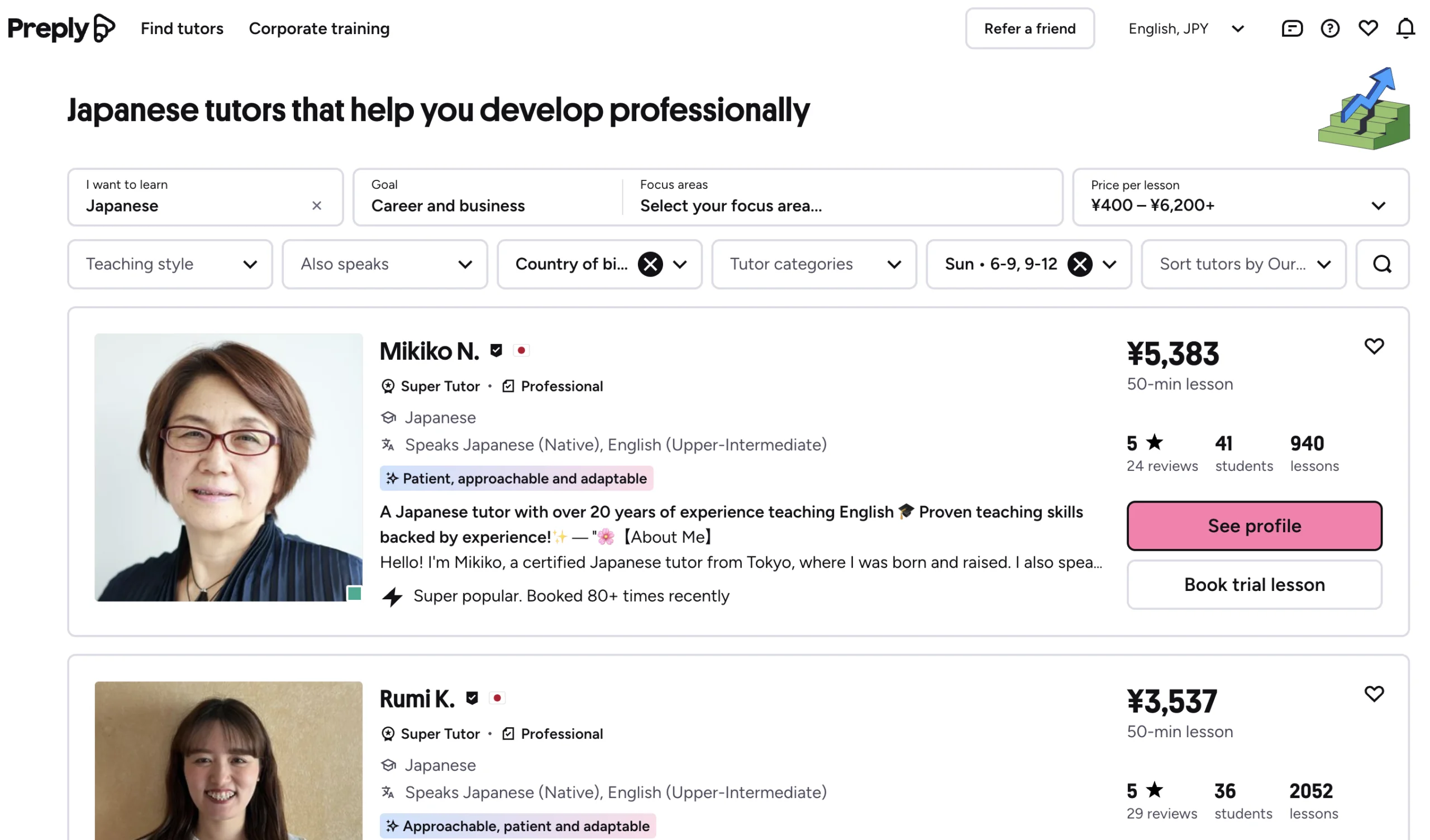
Honest take: the matching questionnaire is a reasonable starting point, but treat its recommendations as a shortlist to investigate, not a final answer. I still found it worth reading full tutor profiles and watching intro videos before booking, the same way I would on italki.
Trial lessons and switching tutors
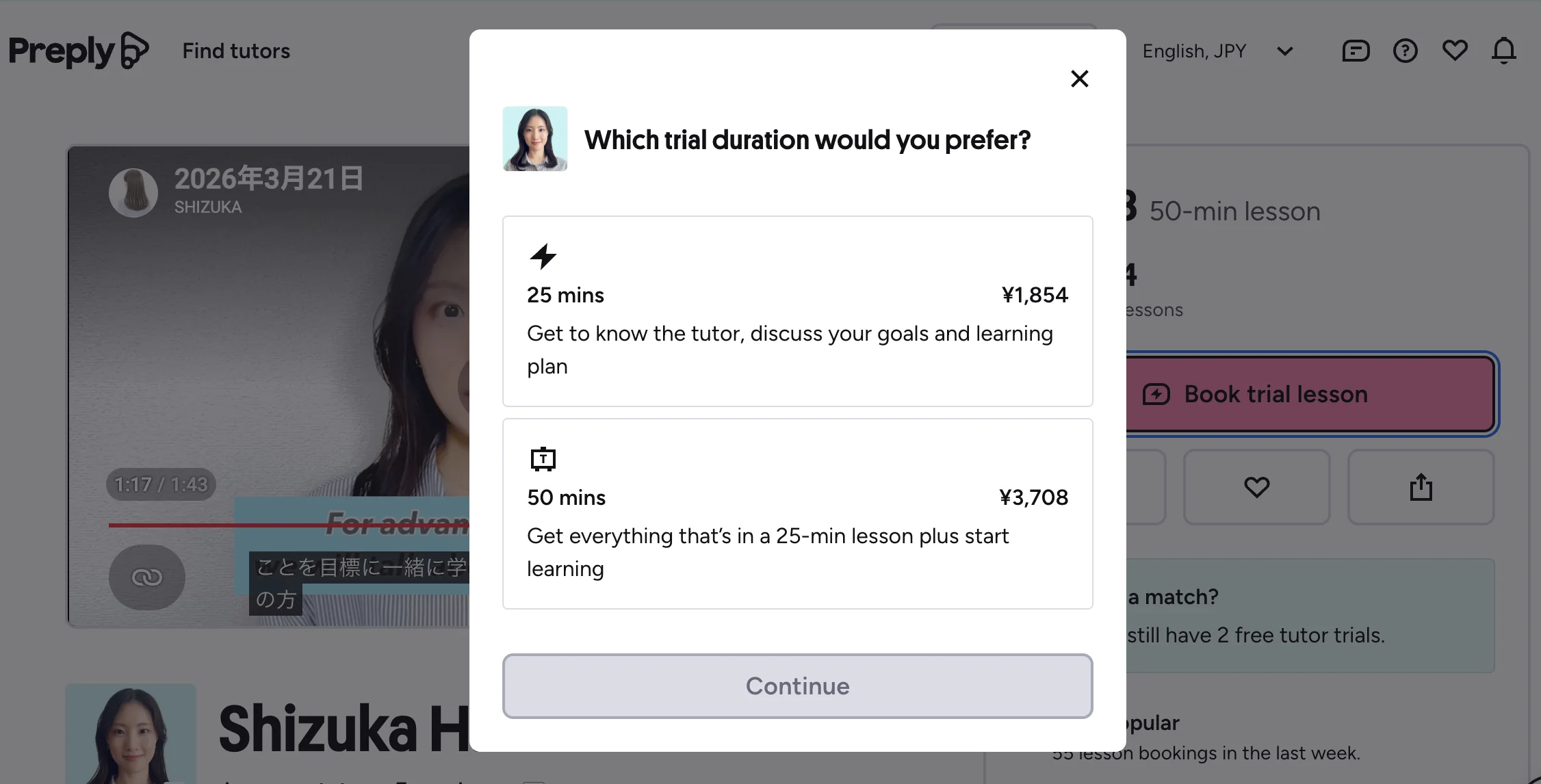
Your first lesson on Preply is a paid trial lesson, 25 or 50 minutes long, and some tutors may offer discounted trial pricing. If your first tutor isn’t a good match, you can try a different tutor’s trial lesson at a 100% discount, up to two times. This lowers the cost of picking wrong on your first try.
Pricing and the subscription
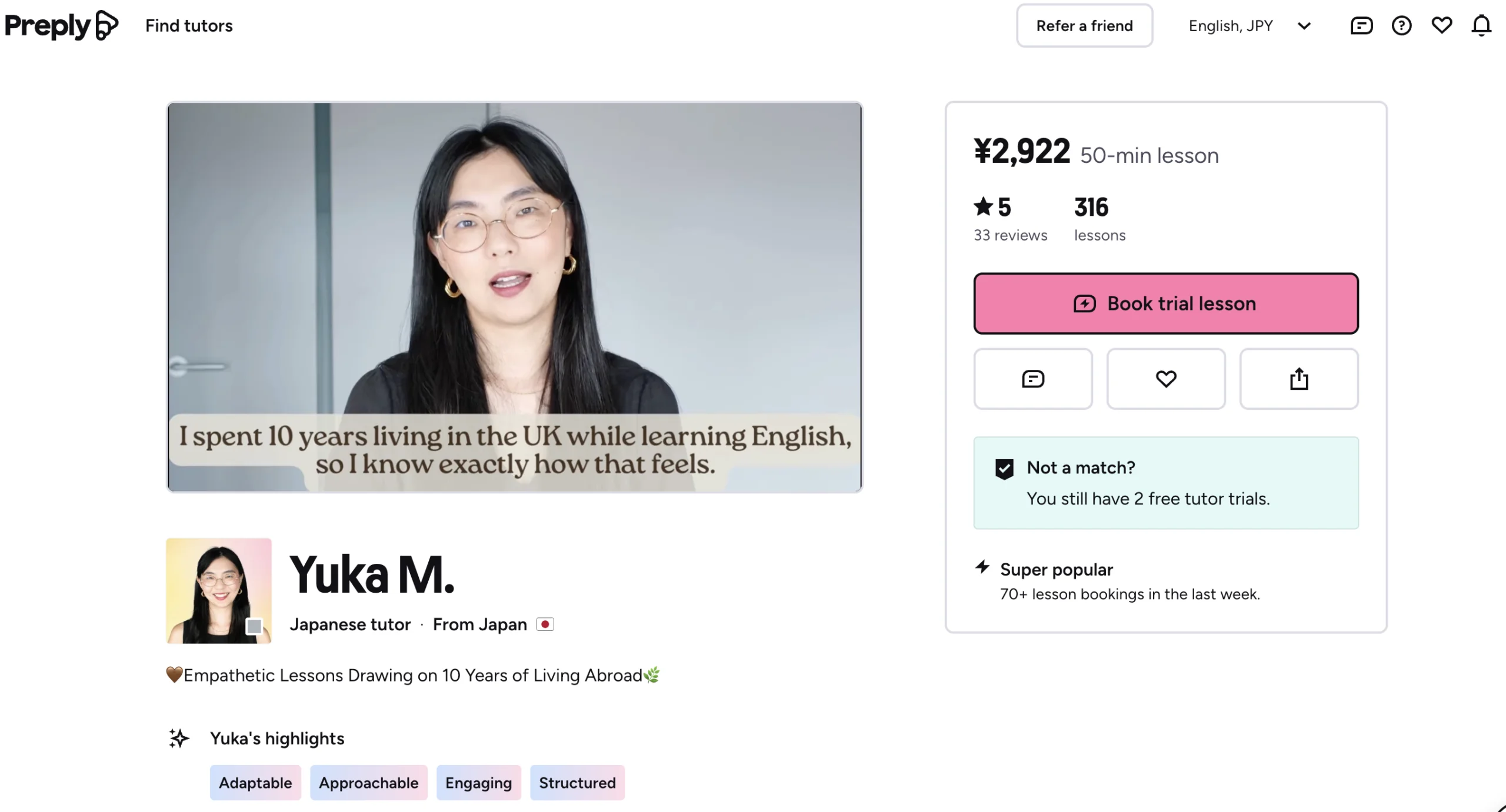
Tutors set their own prices on Preply. Rates of roughly $10–$30 per lesson are commonly seen, but that isn’t an official fixed rate, and some Japanese tutors charge more than $30. Lessons are typically listed as 50-minute sessions, so don’t read those prices as hourly rates. The difference is billing structure: instead of paying per lesson as you go, you subscribe to a tutor, and the subscription renews every 28 days.
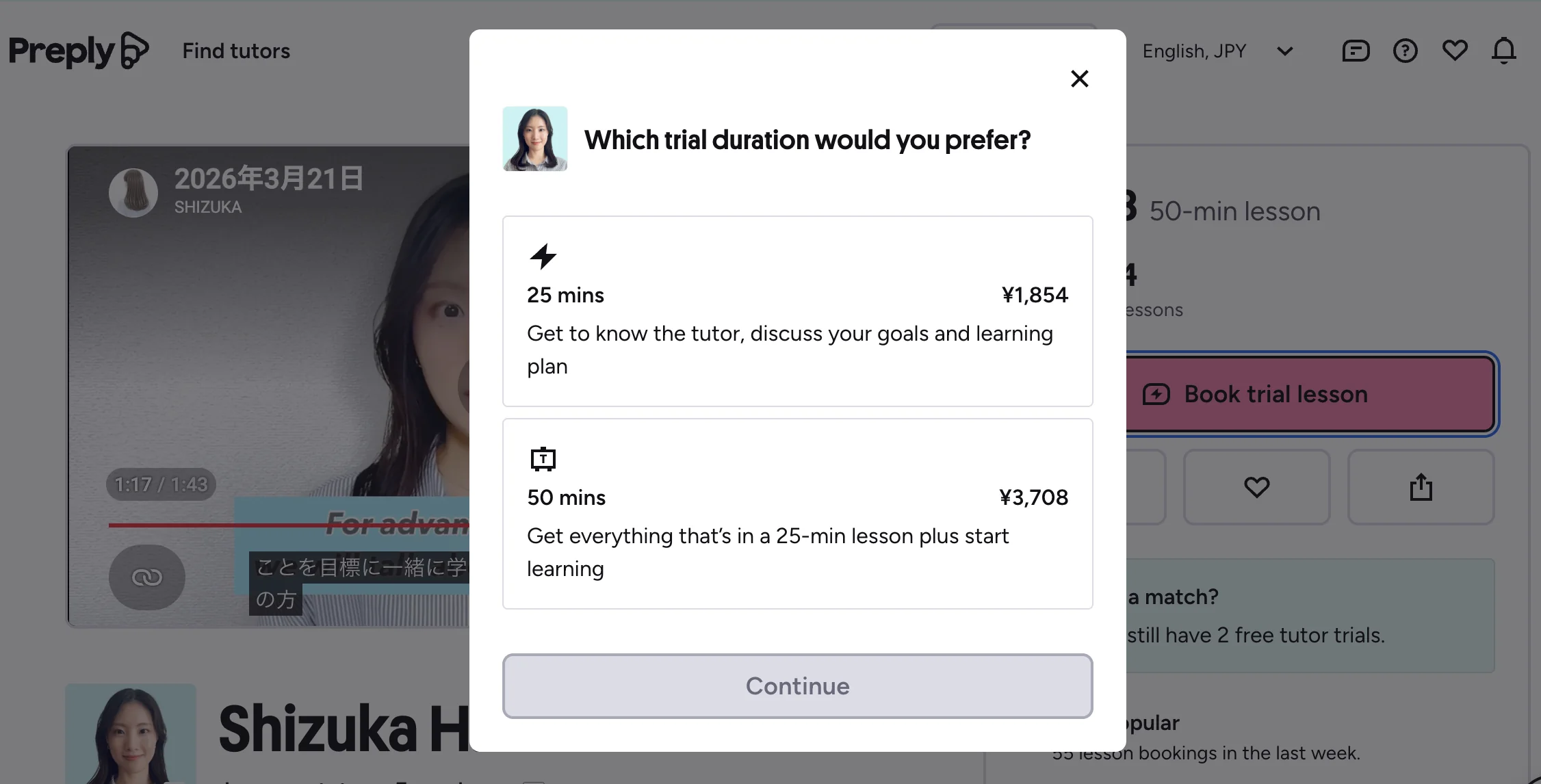
What this means in practice: because the subscription renews automatically every 28 days, compare what a full renewal cycle costs with what the same number of lessons would cost one at a time on italki. Whether that’s worth it depends entirely on whether the commitment actually keeps you showing up — for some learners it does, for others it just becomes a recurring charge they stop using.
What ongoing lessons are actually like
Because Preply nudges you toward sticking with one tutor, the lessons I tried had more continuity than a typical italki trial — the tutor referenced what we’d covered the previous week and adjusted pacing based on an actual ongoing relationship, rather than starting fresh each time. If you value that kind of progress tracking over raw flexibility, this is where Preply’s structure pays off.
Who Preply is actually good for
- Good fit: learners who know from experience that an ongoing subscription to one tutor is what actually keeps them consistent, and who’d rather have Preply narrow down tutor options than browse a full directory themselves.
- Less ideal fit: learners on a tight or unpredictable budget, or anyone who wants to freely mix and match different tutors week to week — for that, italki’s pay-per-lesson model fits better.


コメント