
This article contains affiliate links to Nihoner. If you sign up through them, we may earn a commission at no extra cost to you. It does not affect which options we recommend.
- Why this should be the very first thing you do
- The method that actually works
- Step 1: Learn hiragana first, completely, before touching katakana
- Step 2: Use mnemonics for the first pass, not brute repetition
- Step 3: Switch to spaced repetition immediately after
- Step 4: Read real (short) text daily, starting immediately
- Step 5: Katakana second, using the same method, expect it to be slower
- Which tools actually fit this method
- A realistic 10-day plan
- Related reading
Why this should be the very first thing you do
Before grammar, before vocabulary, before anything else: learn to read hiragana and katakana. These two phonetic alphabets (46 characters each, 92 total) are the foundation everything else is written on top of. Every app, every textbook, every grammar explanation assumes you can read them. Skipping ahead to “real” study before this is solid is the single most common way I see learners slow themselves down.
The good news: 92 characters is genuinely small. Done right, this takes 1–2 weeks, not months.
The method that actually works
Step 1: Learn hiragana first, completely, before touching katakana
Don’t try to learn both alphabets at once — it’s a common instinct (“get it all done together”) that actually slows you down, because the two sets share some visual similarities that are easy to confuse early on. Get hiragana to near-automatic first.
Step 2: Use mnemonics for the first pass, not brute repetition
Hiragana characters aren’t arbitrary shapes — most character-learning apps and charts pair each one with a small visual mnemonic (e.g., め “me” looking like an eye with a curl, similar to the word’s sound). This first pass isn’t about memorizing permanently — it’s about giving your brain a hook so the character isn’t a completely blank shape. This step should take a day or two, not weeks.
Step 3: Switch to spaced repetition immediately after
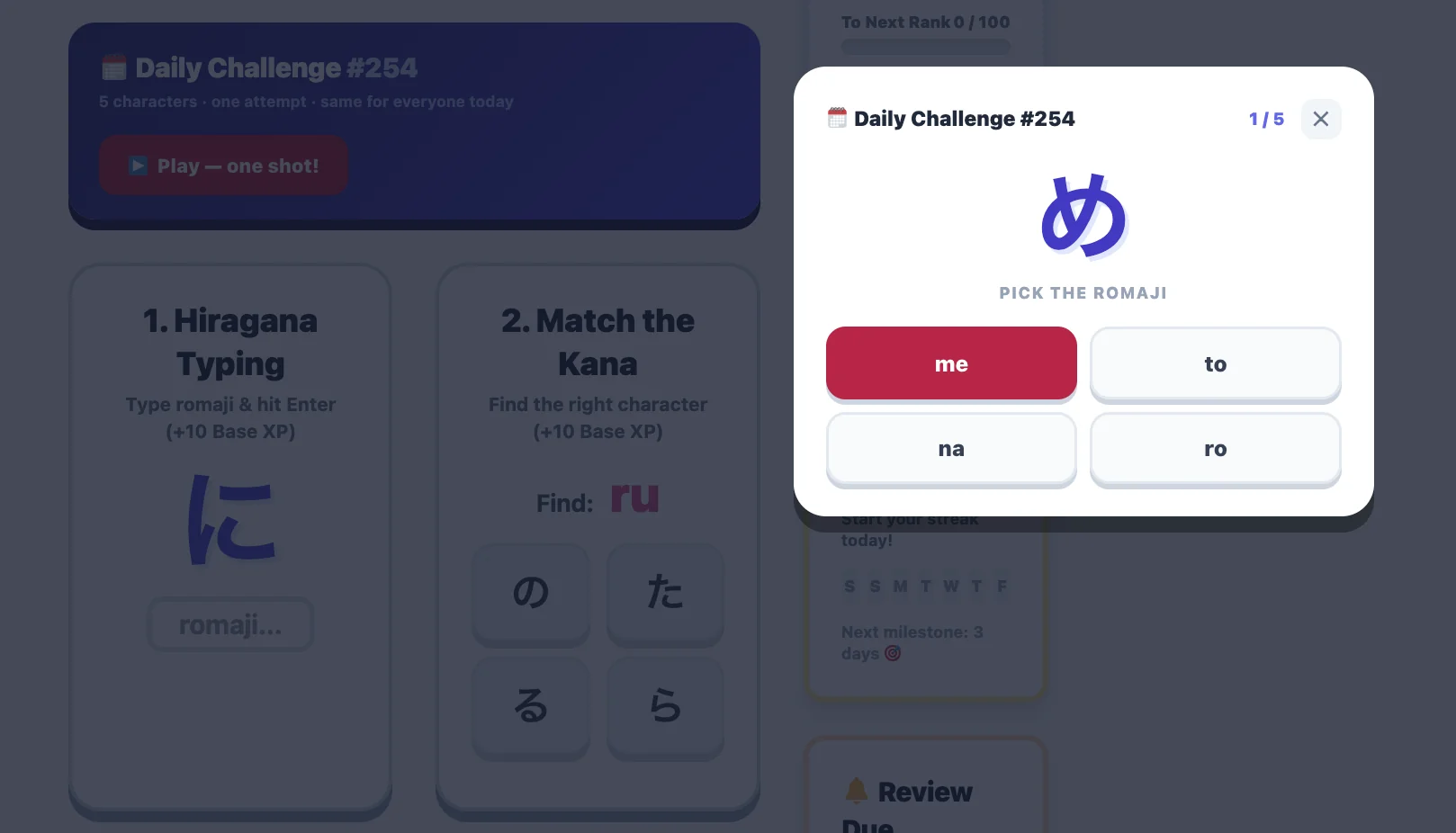
Once every character has at least one mnemonic hook, stop relying on the mnemonic and switch to plain recognition drills — flashcards or a game that just shows you the character and asks what it says, with wrong answers resurfacing sooner. This is where the actual memorization happens, and it’s faster than most learners expect once the mnemonic groundwork is in place.
Step 4: Read real (short) text daily, starting immediately
Don’t wait until you’ve “finished” kana to start reading. As soon as you can slowly sound out a word, start doing it daily — even just a few words a day from a beginner reading passage. This is what actually cements recognition speed; passive review alone plateaus faster than reading practice does.
Step 5: Katakana second, using the same method, expect it to be slower
Once hiragana feels solid, repeat the same four steps for katakana. It will feel slower and more awkward — that’s normal. Katakana shows up far less often in daily material (it’s mostly used for foreign loanwords and emphasis), so you’ll get less incidental practice than you did with hiragana. Budget slightly more deliberate practice time for it.
Which tools actually fit this method
I covered these tools in more depth in my apps comparison roundup, but specifically for kana:
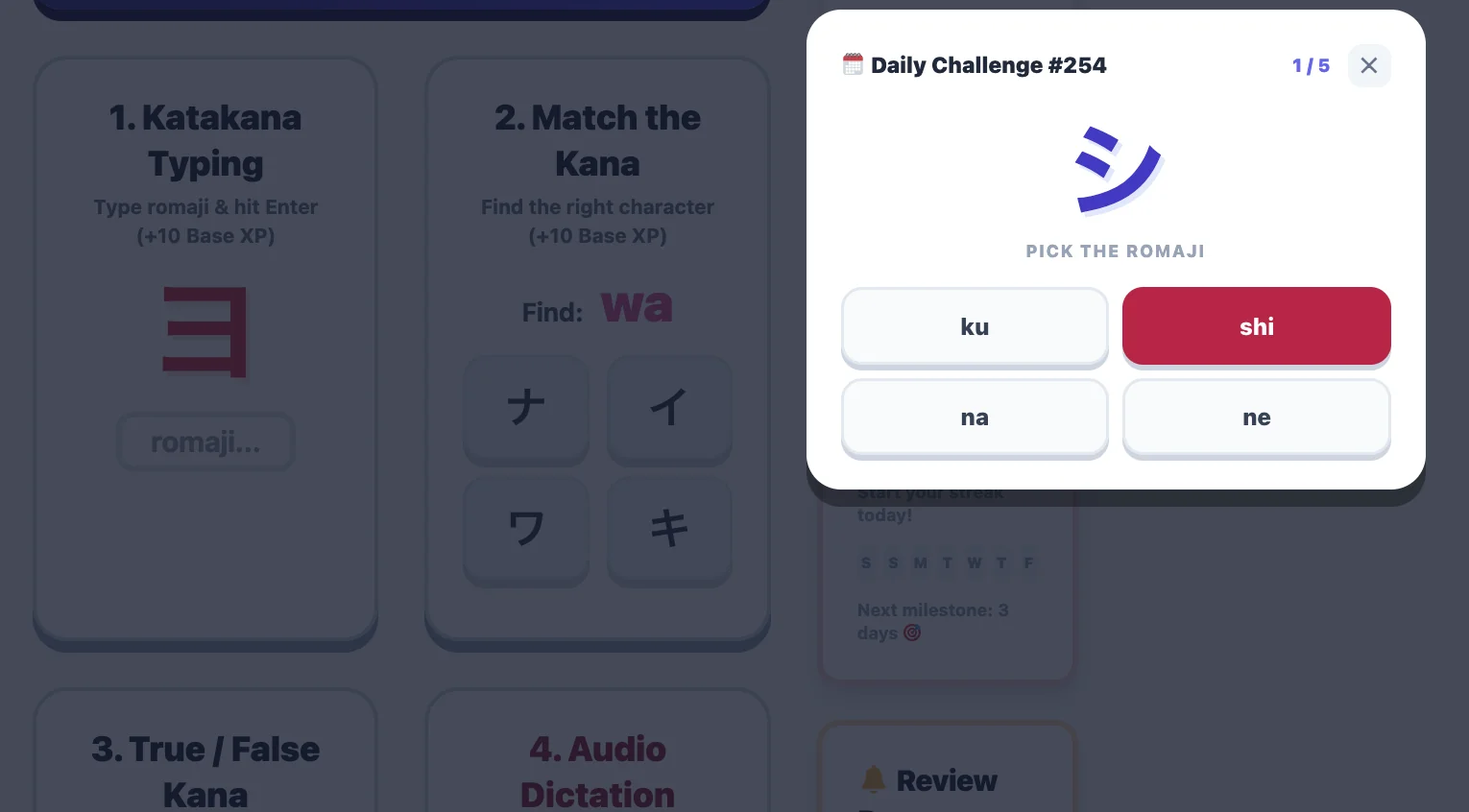
- Nihoner‘s kana games cover both the mnemonic-style introduction and the recognition-drill phase in one place, which fits this method well without switching tools mid-way.
- Duolingo’s early lessons work fine too, though they blend kana practice with vocabulary from the start rather than isolating it — which is fine if you don’t mind a slightly less structured first week.
Whichever you pick, the tool matters far less than actually following the four-step sequence above. I’ve seen learners spend a month on an app that constantly gets recommended, and still not have kana solid, simply because they skipped the “read real text daily” step.
A realistic 10-day plan
| Days | Focus |
|---|---|
| 1–2 | Hiragana with mnemonics, all 46 characters introduced |
| 3–5 | Hiragana recognition drills + start reading a few real words daily |
| 6–7 | Katakana with mnemonics |
| 8–10 | Katakana recognition drills + mixed reading practice (both alphabets) |
By day 10, you won’t be instantly fluent at reading kana — occasional hesitation on a character is normal for a while longer — but you’ll be solid enough to move on to grammar and vocabulary without kana being the bottleneck.


コメント