
What N4 actually tests
JLPT N4 is the second tier up from N5, and it’s less a gentle continuation than most learners expect. The vocabulary and kanji roughly double, the grammar starts stacking (te-form combinations, potential form, plain-form speech alongside polite form), and the reading and listening passages move faster and assume you’re not sounding things out one character at a time anymore.

This roadmap assumes you’ve already covered the ground in my JLPT N5 roadmap — kana, roughly 800 core words, about 100 kanji, and basic grammar patterns. If you haven’t gotten there yet, start there first; N4 builds directly on top of it rather than re-teaching it.
A note on these numbers: the JLPT does not publish an official vocabulary, kanji, or grammar list. Since the 2010 revision, it has released only level summaries and sample questions, explaining that the goal of learning Japanese is communication rather than memorising lists. Figures like these come from textbooks and learning sites, not from the JLPT itself. (Sources: JLPT official FAQ; Japanese-Language Proficiency Test on Wikipedia.)
Like N5, the exam covers vocabulary/grammar, reading, and listening, with no speaking component. That’s still worth flagging here for the same reason it was worth flagging at N5: passing N4 and being able to hold a conversation are two different skills, and this roadmap treats them separately.
The four things you actually need to cover
1. Grammar patterns (the real jump)
N4 grammar is where the exam stops feeling like N5-with-more-vocabulary. You’ll add plain-form speech (だ instead of です, the casual verb endings) used alongside polite form, te-form combinations (〜てもいい, 〜てはいけない, 〜ている for ongoing states), potential form (見られる, 食べられる), volitional form, and conditionals (〜たら, 〜ば). None of these individually are hard, but N4 is the first level where you’re expected to recognize several of them stacked in the same sentence.
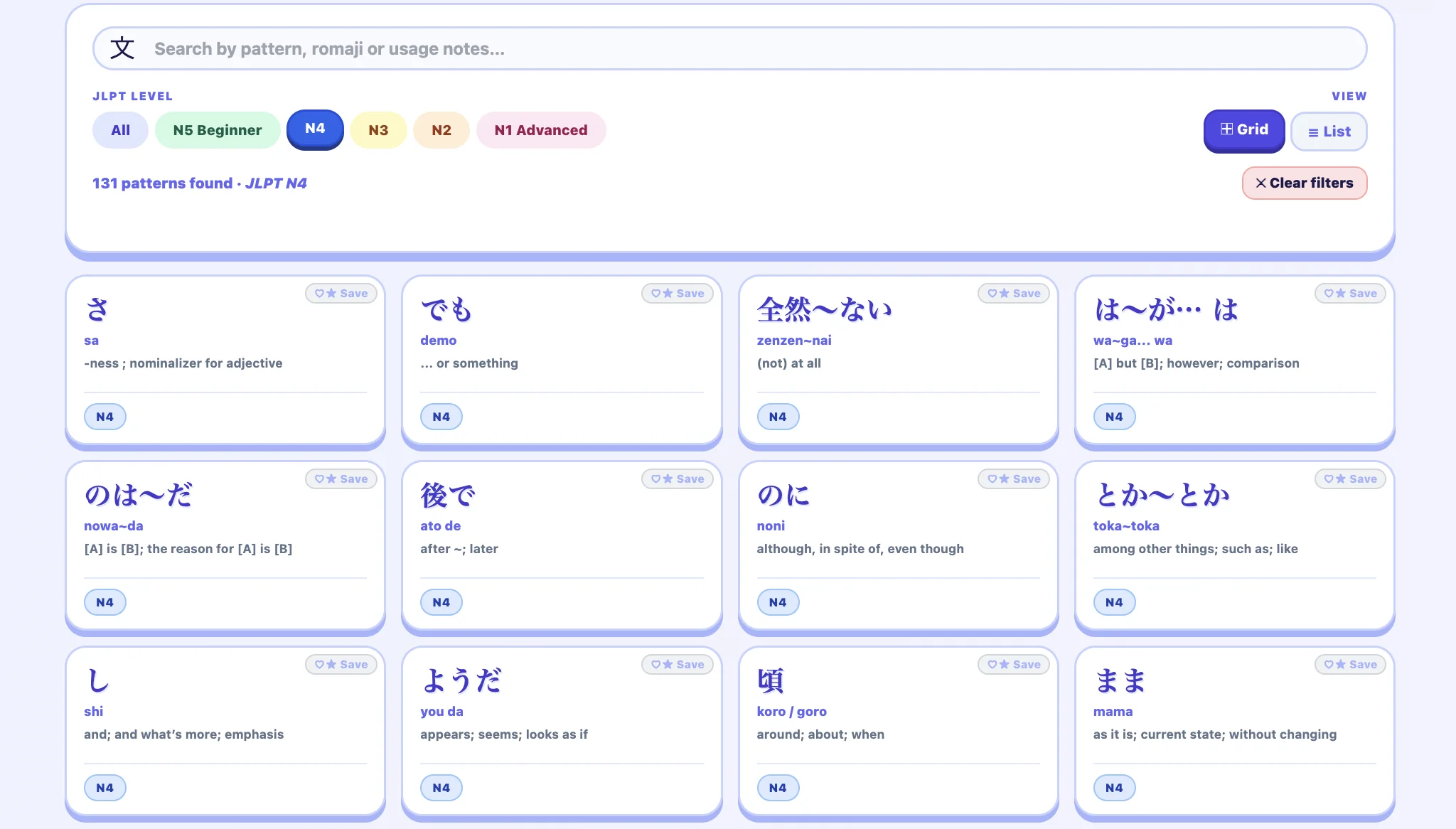
What covers this well: the same approach that worked for N5 — a structured grammar path ordered by JLPT level, rather than a general grammar textbook you work through linearly. Nihoner‘s grammar path continues into N4, which matters here specifically because it keeps N5 and N4 patterns visually distinct instead of blending them into one long list.
2. Vocabulary (roughly 1,500 words, cumulative)
N4 vocabulary is commonly cited at around 1,500 words total — a cumulative figure that includes the roughly 800 words from N5, not 1,500 new ones. The words themselves shift slightly in character: less “everyday object” vocabulary, more words for describing situations, feelings, and sequences of events (finally, suddenly, on purpose, by mistake).
What covers this well: the same spaced-repetition approach as N5, just with a bigger deck. The main adjustment at N4 is making sure your review tool is actually separating N5 words you’ve already mastered from new N4 words, so you’re not re-drilling vocabulary you don’t need anymore.
3. Kanji (roughly 300 characters, cumulative)
N4 kanji are usually estimated at roughly 300 characters, up from N5’s roughly 100. (There’s no official JLPT kanji list. Estimates range from about 170 to 300 because sites count differently: the lower numbers cover the kanji introduced at N4 itself, while the higher ones include the roughly 100 kanji from N5. Treating 300 as your target covers you comfortably either way.) This is where a lot of learners feel the workload jump hardest, because a whole new batch of kanji in one level is a real volume increase, and N4 kanji start showing up in multi-kanji compound words more often than N5’s mostly-standalone characters did.
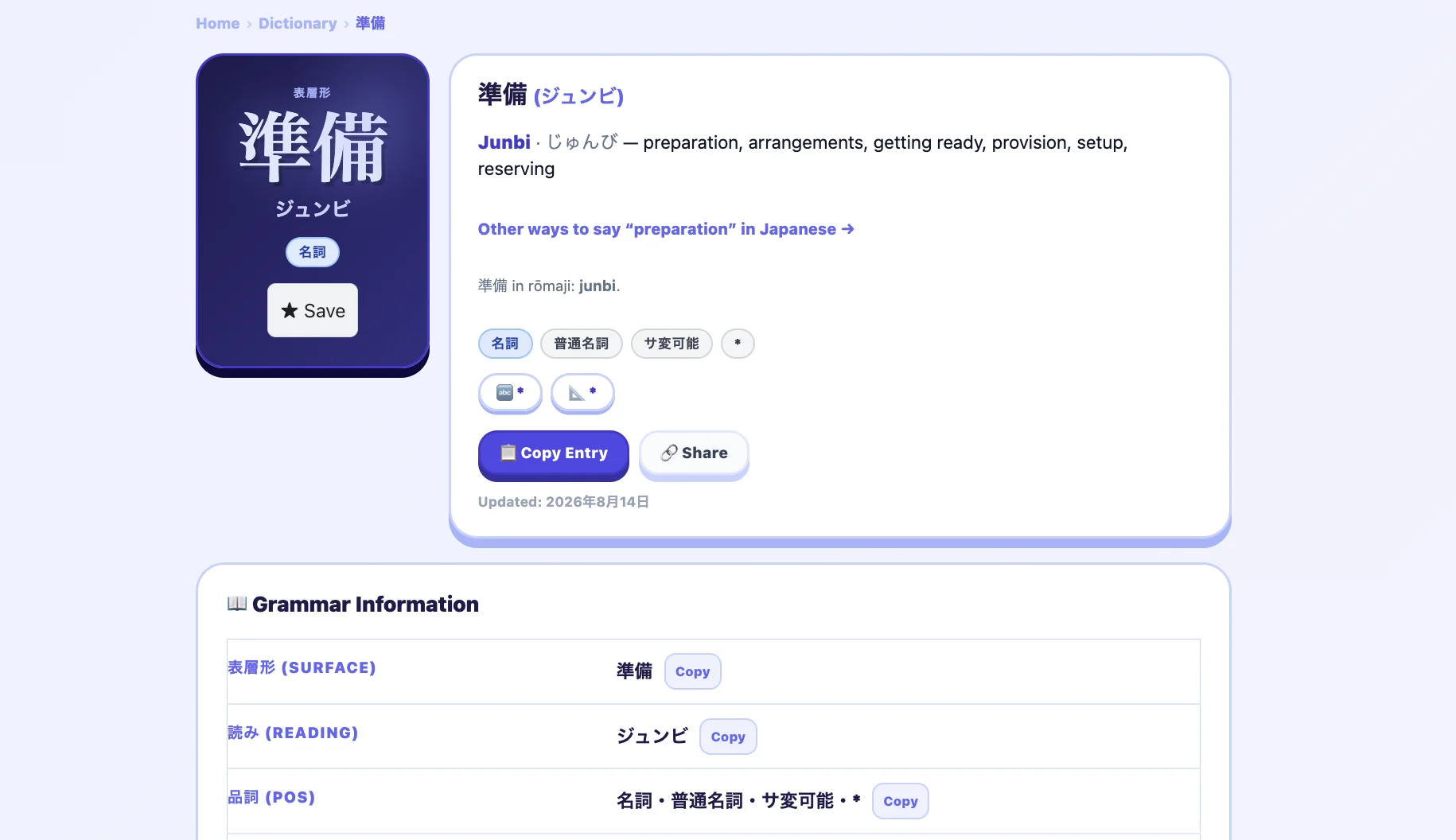
What covers this well: keep doing recognition-first practice (reading it in context) before writing-from-memory, same as N5. If your kanji review tool is starting to feel thin at this volume, this is roughly the point where a dedicated kanji-focused SRS tool becomes worth adding on top of whatever you used for N5 — the character count is high enough that a tool built specifically around spaced repetition for kanji pays for itself.
4. Listening (the part N5 barely tested)
N4 listening moves noticeably faster than N5’s, and the passages get longer — short dialogues and exchanges rather than single sentences. This is the section where “I understand it if I read it” and “I understand it at native speaking speed” start to visibly diverge for a lot of learners.
What covers this well: daily listening practice specifically, not just reading practice that happens to have audio attached. Short daily listening — even five to ten minutes of graded dialogue — builds the speed tolerance that cramming right before the exam can’t.
A realistic timeline
Assuming you’re starting from a solid N5 (not “technically passed but shaky”), here’s a grounded estimate at 20–30 minutes a day:
- Weeks 1–3: Plain form and the early te-form patterns, reviewed constantly against what you already know from N5
- Weeks 2–12: Remaining grammar patterns, introduced gradually
- Ongoing from week 2: Vocabulary flashcards, layered on top of your existing N5 deck
- Weeks 4–16: The new N4 kanji, paced steadily rather than crammed
- Ongoing from week 6: Daily listening practice, short and consistent
- Weeks 14–18: Practice tests and timed reading/listening sections
This roadmap covers the order to study things in, and a daily 20–30 minute habit will take you through the material in about 4–4.5 months if you’re coming in with a solid N5. Reaching a level where you can pass the exam is a different question: survey data collected from Japanese language schools between 2010 and 2015 puts N4 at roughly 400–700 hours in total for learners who already read kanji, and 575–1,000 hours for those who do not. These are self-reported figures from language institutions, not an official JLPT standard.
The 4–4.5 months runs a bit longer than the N5 schedule, mostly because of the kanji volume and the grammar stacking. If your N5 was shaky going in, budget extra time up front to firm that up before pushing into N4 material; N4 assumes N5 is close to automatic, not still effortful.
Where speaking practice fits in
Same structural gap as N5: no speaking component on the exam, same temptation to skip conversation practice entirely and just grind vocabulary and grammar. The stakes are a little higher at N4, though, because the plain-form speech you’re learning for the exam is also the speech register you’ll actually use in casual conversation — this is a good point to start using what you’re studying, not just recognizing it on paper.

Even 20–30 minutes a week with a tutor through italki or Preply does something a solo app genuinely can’t at this level: it forces you to actually produce the plain-form and te-form patterns you’re studying, in real time, instead of just recognizing them on a multiple-choice question.
After N4: what comes next
Passing N4 puts you at a genuine functional floor — enough grammar and vocabulary to handle everyday situations, even if slowly. N3 is the next tier, and it’s a bigger jump than N4 was from N5: learning-site estimates put N3 vocabulary at around 3,750 words and kanji at roughly 650, and the grammar shifts from “recognizable patterns” to include more nuanced, context-dependent forms that don’t always translate cleanly into English.
The honest advice here is the same shape as N5 → N4: don’t rush straight into N3 material the week after your N4 exam. Give the N4 grammar and kanji a few weeks to actually settle — reading real, simple material (not just textbook exercises) at the N4 level — before adding N3’s volume on top. The learners who struggle most at N3 are usually the ones who treated N4 as a checkbox to clear rather than a level to actually absorb.
This is also roughly the point where some learners start weighing whether to keep the online-tutoring pace or switch to something more structured — worth thinking through before you commit to N3.


コメント